



Strong buyer consultation skills come down to four habits: prepare before the meeting, ask questions that uncover the real motivation, explain how representation and compensation work in plain words, and leave with clear next steps. The consultation is the first meeting where a buyer decides whether to work with you. It is also where you decide whether you can serve them well. Get it right and the paperwork becomes the natural outcome of trust, not a hurdle.
This guide walks you through the whole meeting in the order it happens, with sample questions, a simple agenda, and the follow-up that keeps the buyer moving.
Key Takeaways
- A buyer consultation is a two-way interview. The buyer is judging fit, and so are you.
- Preparation (local market, contracts, a short pre-meeting questionnaire) is what lets you listen instead of recite.
- Talk less than the buyer. Connect every piece of information you share to something they told you.
- Explain agency, compensation, and the transaction stages before an offer is written, and confirm local rules with your brokerage.
- Summarize in writing the same day and set the next contact before the buyer leaves.
Table of Contents
- What a Buyer Consultation Is (and What It Should Accomplish)
- Prepare Before the Meeting
- Build Rapport by Listening First
- The Questions That Matter
- Explain the Process, Representation, and Compensation
- A 60-Minute Consultation Agenda
- Our Perspective: Skills Are a Practice, Not a Personality
- Follow Up After the Meeting
- What About Seller Consultations?
- Build the Skills With Training
- Common Mistakes to Avoid
- FAQ
- Sources
What a Buyer Consultation Is (and What It Should Accomplish)
A buyer consultation is an initial meeting between a buyer and a real estate professional. The Federal Savings Bank describes it as partly an interview: both sides assess whether they are a good match and set expectations for the homebuying process. The buyer talks about what they want and what worries them. They also ask about your experience and services.
Rocket Mortgage’s overview lists the ground a good meeting covers: the buyer’s situation, preapproval, pricing and value trends, offers, appraisal, inspection, closing, and the buyer’s timing.
That gives you three jobs in one meeting:
- Understand the buyer: needs, budget, motivation, timeline.
- Educate the buyer: how the process works, what you do, how you are paid.
- Agree on the next step: a signed agreement where your brokerage and state rules call for one, a lender introduction, or a first showing plan.
Most agents who struggle with consultations try to do the second job first. They lead with their résumé and a slide deck of process steps. The buyer nods and leaves without feeling heard.
Prepare Before the Meeting
Kevin Waugaman writes in Florida Realtors that preparation is the antidote to fear. His advice: practice your questions, learn the local market and the contracts, and assemble buyer resource packages. Knowing your material is what frees up your attention to focus on the person across the table.
A practical preparation checklist:
- Know the contract. Read through the sample purchase contract your brokerage uses so you can explain each stage without hunting for the clause.
- Know the neighborhoods. Be ready to talk about the areas the buyer has mentioned: price ranges, property types, and what is moving.
- Build a resource package. A one-page process overview, a list of vetted professionals, and a blank copy of your agreement.
- Send a pre-consultation questionnaire. Inman reports that a short form covering demographics, budget, and timeline saves time in the meeting and shows how committed the buyer is.
- Practice out loud. Say your explanation of compensation and agency to a colleague until it sounds like conversation, not a script.
Check your own brokerage’s required forms and disclosures before every meeting. State law and brokerage policy set what you must present and when, and those rules can change.
Build Rapport by Listening First
Rapport is not small talk. It is the buyer’s sense that you understood them. Florida Realtors’ framework says connection comes from intentional follow-up questions, real listening, caring about the answers, and showing the buyer that you understood.
A recent Inman piece on the first buyer meeting makes a related point: do not talk for the entire meeting. Treat it as a conversation, and speak mainly to tie information to the concerns and goals the buyer has stated.
In practice:
- Take notes visibly. It tells the buyer their words matter, and you will need the details later.
- Follow up on the answer, not the next question on your list. If a buyer says they want “more space,” ask what is cramped about the current home.
- Reflect back. “So the commute matters more than the yard, and you want to be settled before school starts. Did I get that right?”
- Let silence work. A pause after a question often produces the real answer.
If you also work with investor buyers, tools such as an AI real estate investment marketplace can show how deal analysis and prequalification fit into the conversation. Use them to support your questions, not to replace them.
The Questions That Matter
The NAR buyer-agent guide says the consultation should identify the buyer’s wants, non-negotiable needs, budget, financial requirements, and what type of property that budget can buy. Use those as your backbone and add the layers below.
Needs and motivation
- What is prompting the move now?
- What do you like and dislike about where you live today?
- Which features are non-negotiable, and which are nice to have?
- If you could only get two of your top five wishes, which two?
Inman describes the HOMES system as a way to outline the real problem, not just the surface answer. That clarifies motivation and trade-offs. The principle is simple: a buyer who says “three bedrooms” may really mean “a room where I can work from home.”
Budget and financing
- Have you spoken with a lender, and do you have a preapproval?
- What monthly payment feels comfortable, not just approvable?
- How much cash do you have available for the down payment and closing costs?
- Are there other financial moves coming, such as selling a home or changing jobs?
You are not underwriting the loan. You are making sure the search matches what the buyer can actually do. If there is no lender yet, offer an introduction.
Timing and expectations
- When do you need to be in the new home?
- Is there a lease end, a school year, or a sale of your current home driving the date?
- How often would you like to hear from me, and by what channel?
- What worries you most about this process?
The last question is where trust is built. Buyers who name a fear and see you take it seriously are far more likely to sign.
Explain the Process, Representation, and Compensation
Once you understand the buyer, you can explain how you will help in terms that fit them. The NAR guide says the agent should cover agency relationships, applicable state law and brokerage policies, fair-housing requirements, compensation, confidentiality, disclosures, the transaction timeline, local-market conditions, financing options, ownership costs, and the sample sales contract.
That is a long list, so pace it. Inman’s consultation guidance recommends explaining the transaction in stages: offer, active contract, and closing. Review contingencies, disclosures, inspections, repairs, financial obligations, and closing preparation before an offer is written. A buyer who has heard this once is calmer when the inspection report arrives.
A simple stage-by-stage explanation
| Stage | What you explain | What the buyer should leave knowing |
|---|---|---|
| Before the search | Agency, your services, how you are paid | What they are agreeing to and why |
| Offer | Price strategy, contingencies, deposits | How a competitive offer is built |
| Active contract | Inspections, repairs, financing, disclosures | Which deadlines they control |
| Closing | Final walkthrough, funds, paperwork | What to bring and when |
Talking about compensation
Buyers pay close attention here, so be direct. Explain how your brokerage is compensated and the ways that compensation may be paid, using your brokerage’s current forms. Rules differ by state and brokerage. For example, one Maryland Realtors guide says the buyer consultation should review the Buyer Agency Agreement, explain compensation and how it may be paid, and have the buyer sign before touring homes. That is Maryland’s practice, so confirm what applies in your state and with your broker.
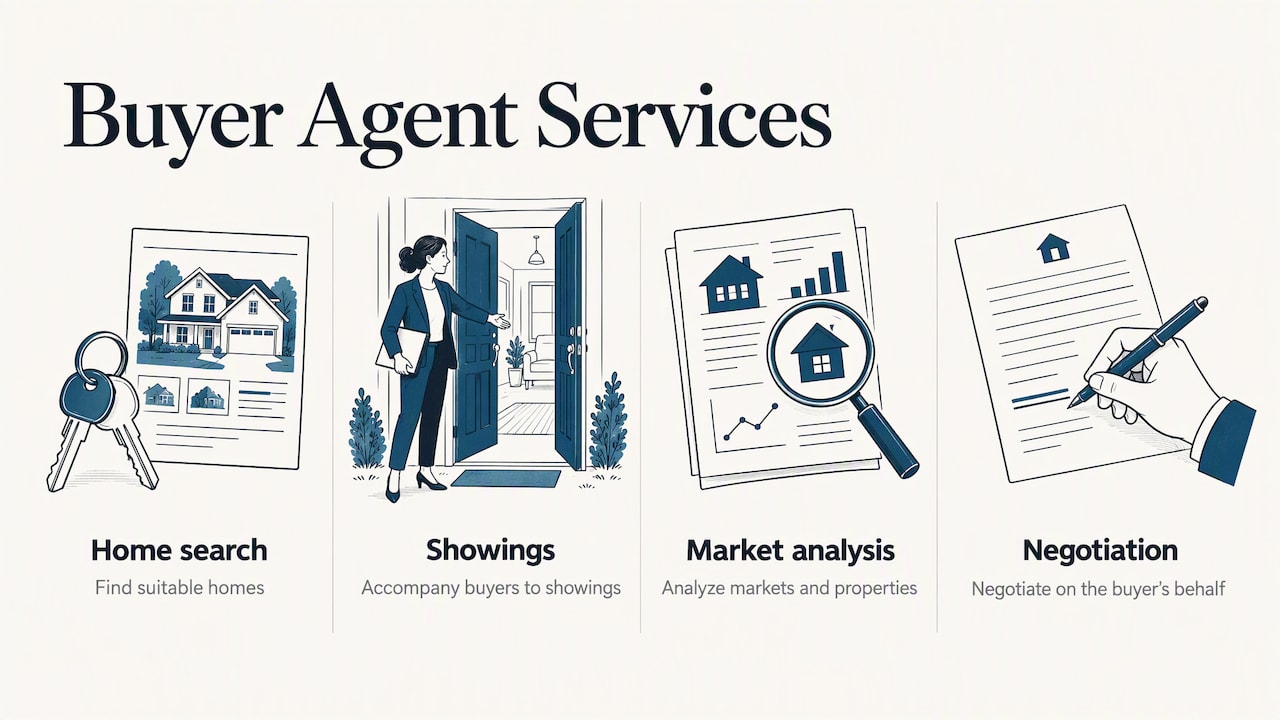
NAR’s consumer guide tells buyers to evaluate an agent’s services, including finding suitable homes, accompanying showings, analyzing the market and properties, and negotiating on their behalf. Walk through those four services yourself and attach a concrete example to each. Your value is easier to understand when it is specific.
Darryl Davis makes the point that the buyer agreement is the result of doing the rest of the meeting well: build trust first and the paperwork takes care of itself. Do not open with the form.
A 60-Minute Consultation Agenda
Use a repeatable structure so nothing is forgotten, and adjust the timing to the buyer.
- Welcome and agenda (5 minutes). State what you will cover and ask if there is anything they want to add.
- Discovery (20 minutes). Needs, motivation, budget, timeline, concerns. You listen for most of this.
- Market snapshot (10 minutes). Show what their criteria look like in the current local market. Tie it back to what they said.
- Process and representation (15 minutes). Stages, agency, your services, compensation, and your communication plan.
- Agreement and next steps (10 minutes). Present the agreement where required, confirm the lender step, and schedule the first showing or search review.
If the buyer is still early and overwhelmed, shorten step 4 and promise a written summary. You do not need to cover every item in one sitting, as long as nothing the buyer needs for a decision is missing.
Our Perspective: Skills Are a Practice, Not a Personality
We see the same pattern with agents at every stage: the strongest consultations come from people who practiced, not people who were born charming. Listening, explaining, and following up are learnable skills, and the agents who treat them as a craft keep improving long after the license is in hand.
That is why we build our professional development courses to be practical and self-paced, in English, Spanish, and Portuguese, with read-along narration so you can learn in the way that suits you. Passing the licensing exam is a milestone, not a finish line. The business skills that follow, such as lead conversion, listing and buyer presentations, and client communication, are what help you attract and keep clients.
If you are newly licensed, a consultation is where your education meets a real person with real money and real stakes. We want you walking into that room prepared.
the author
Follow Up After the Meeting
The meeting does not end when the buyer leaves. A strong follow-up looks like this:
- Same day: send a summary email that recaps what you discussed and confirms action items. Include the communication commitment you agreed on.
- Next day: send a few thoughtful property recommendations that match what the buyer told you, not a generic feed.
- Within the week: introduce a lender or another provider if the buyer needs one, and confirm the date of your next check-in.
- Ongoing: keep your word on frequency. Missing a promised update undoes much of the trust you built.
A written recap does two jobs. It shows the buyer you were paying attention, and it gives you a record to return to when priorities shift. For more on staying in touch, see our guide to real estate email marketing.
What About Seller Consultations?
Seller consultation skills overlap with buyer skills: preparation, listening, and clear explanation. The goal differs. With a buyer you are matching needs to a market. With a seller you are usually presenting a pricing and marketing plan for a specific property, so your presentation skills and market analysis carry more weight. The discovery questions change too: why the seller is moving, the timeline, and what they expect the home to bring.
If listings are a focus for you, our Listing Agent Success Package covers that side of the business in more depth.
Build the Skills With Training
Reading a framework is a start. Practicing it is what changes your results. Our course catalog covers the client-facing skills discussed here:
- From Lead to Client: Real Estate Lead Conversion is $29 and focuses on turning inquiries into signed clients.
- The professional development courses include The Modern Listing Presentation at $29 and other business skills courses, each $29 unless listed otherwise on the page.
- The Real Estate Client & Presentation Skills Package bundles client and presentation training in one enrollment.
- Our guide to client communication skills goes deeper on listening and expectation-setting.
If you are earning or renewing a Florida license, our state-approved pre-licensing, post-licensing, and continuing education courses are on the Florida courses page. Completions are reported electronically, and every course carries a 30-day money-back guarantee.
Prices on our offer pages include Florida Sales Associate 63-hour pre-licensing at $99, the 45-hour post-licensing course at $79, and the 14-hour continuing education course at $23.95. Check the course page for current details before you enroll.
Common Mistakes to Avoid
- Reciting your résumé for 20 minutes. The buyer wants to know you understood them. Keep your credentials short and relevant.
- Skipping the lender conversation. A search without a realistic budget wastes both your time and the buyer’s.
- Using jargon without checking. Terms like contingency, escrow, and earnest money are routine to you and new to many buyers. Define them once, simply.
- Presenting the agreement as a formality. Explain what it means and why it protects both sides. Your brokerage and state rules decide what you must present.
- Overpromising on the market. Describe what you see in local data and avoid guarantees about prices or competition.
- Forgetting fair housing. Ask about needs and preferences related to the home, and never steer. Review your brokerage’s fair-housing guidance regularly.
FAQ
How long should a buyer consultation take?
Plan on about an hour for a full first meeting, with discovery taking the largest share. A buyer who is early in the process may need a shorter first meeting followed by a written summary. What matters is that you finish with a clear next step, not that you hit a time target.
What should I bring to a buyer consultation?
Bring your brokerage’s buyer agreement and required disclosures, a one-page overview of the process, a market snapshot for the areas the buyer mentioned, and a notepad. If a pre-consultation questionnaire was completed, bring it so you can build on it instead of repeating questions.
Should the buyer sign an agreement at the first meeting?
That depends on your state’s rules and your brokerage’s policy. Some require a signed agreement before you tour homes with the buyer, as in the Maryland guidance above. Ask your managing broker what applies to you. In every case, explain the agreement before you ask for a signature.
What questions should a buyer ask the agent?
Buyers commonly ask about your services, how you prefer to communicate, your experience, your knowledge of their target neighborhoods, fees, referrals to other professionals, how long the process takes, likely challenges, and the current level of market competition. Welcome these questions. They signal a buyer who is engaged.
Sources
- Understanding a Buyer Consultation: What to Expect and Why It Matters (The Federal Savings Bank)
- What is a buyer consultation? (Rocket Mortgage)
- Your Foolproof Framework for Buyer & Seller Consultations (Florida Realtors)
- 12 Key Steps For Creating Confident And Effective Buyer Consultations (Inman)
- Here’s What Your First Meeting With A Buyer Should Look Like (Inman)
- Let The HOMES System Help You Nail Your Next Buyer Consultation (Inman)
- Anatomy Of A Client Consultation: A Head-To-Toe Approach (Inman)
- NAR buyer-agent guide: 105 Ways a Buyer’s Agent Benefits You
- Consumer Guide: Ten Questions to Ask a Buyer’s Agent (NAR)
- 152 Things (Maryland Realtors)
- Reidy.ai
Recommended
- Client Communication Skills Every Real Estate Agent Needs
- Real Estate Email Marketing: A Practical Guide for Agents
- Agent Productivity: How Real Estate Agents Get More Done
- From Lead to Client: Real Estate Lead Conversion
This article is provided for general information and is not a professional advice.